
A Fly to Tie & Try Sept 2026 by Les Lockey
Fly of the Month – September
by Les Lockey
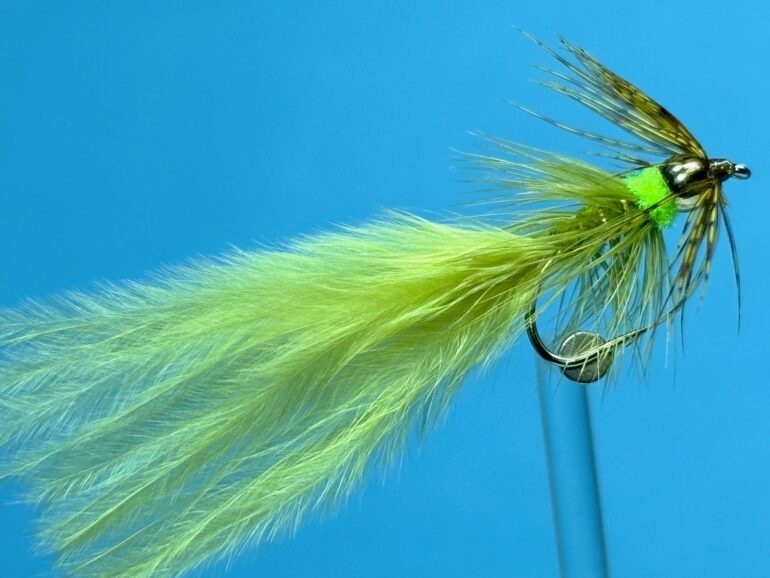
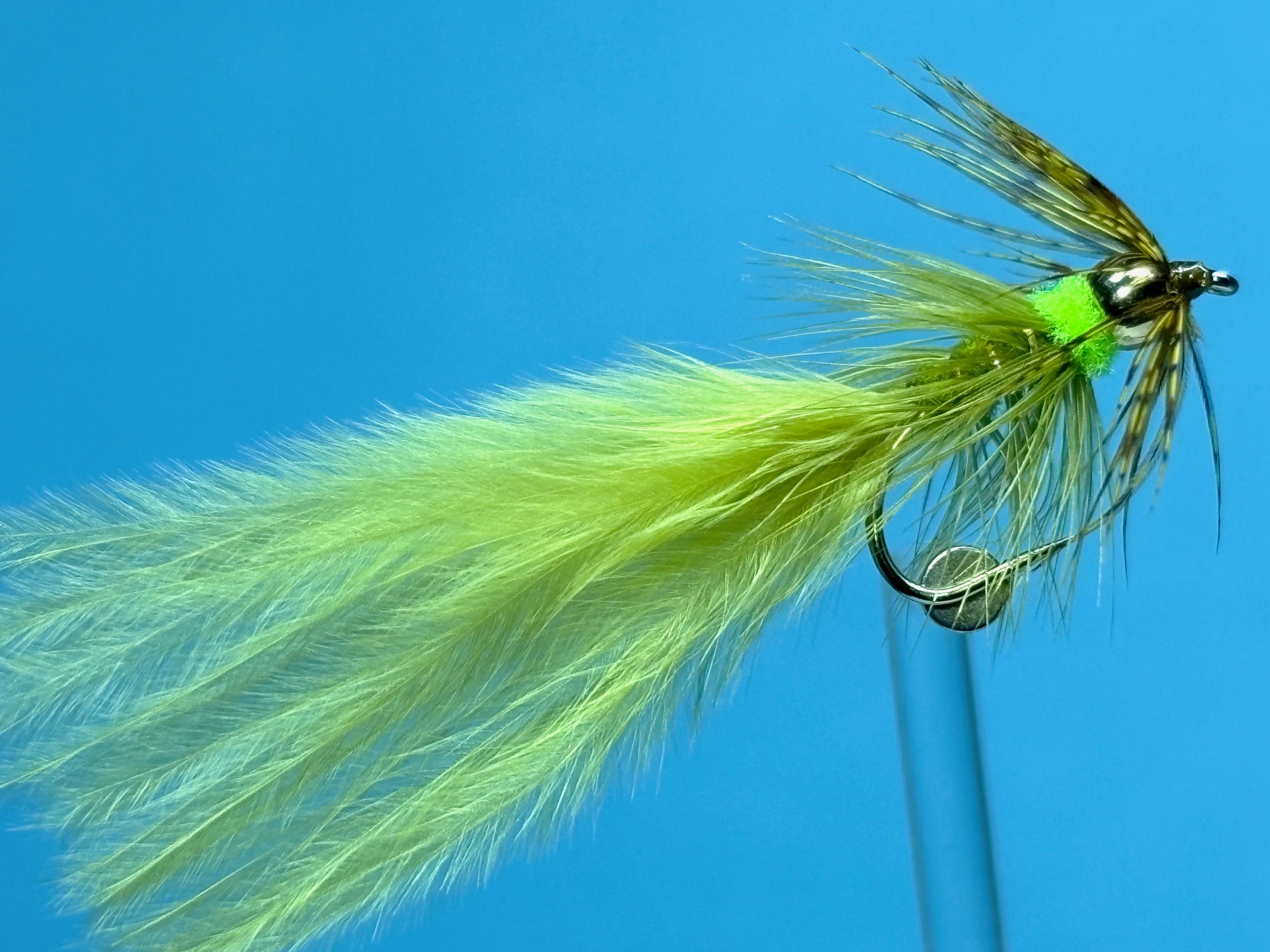
The Gold Head Damsel Nymph
Hook: Fario 300FBL, size 10, with 3.2mm gold brass bread, (Kamasan B170 barbless alternative).
Thread: Roman Moser Powersilk GSP, 10/0, olive, or any fine olive thread.
Tail: Light olive marabou.
Rib: Fine oval gold tinsel.
Abdomen: Olive Nano Eggstasy, from Flybox, or olive ultra chenille.
Body hackle: Olive genetic hen, palmered.
Thorax: Fl. Chartreuse Nano Eggstasy, from Flybox.
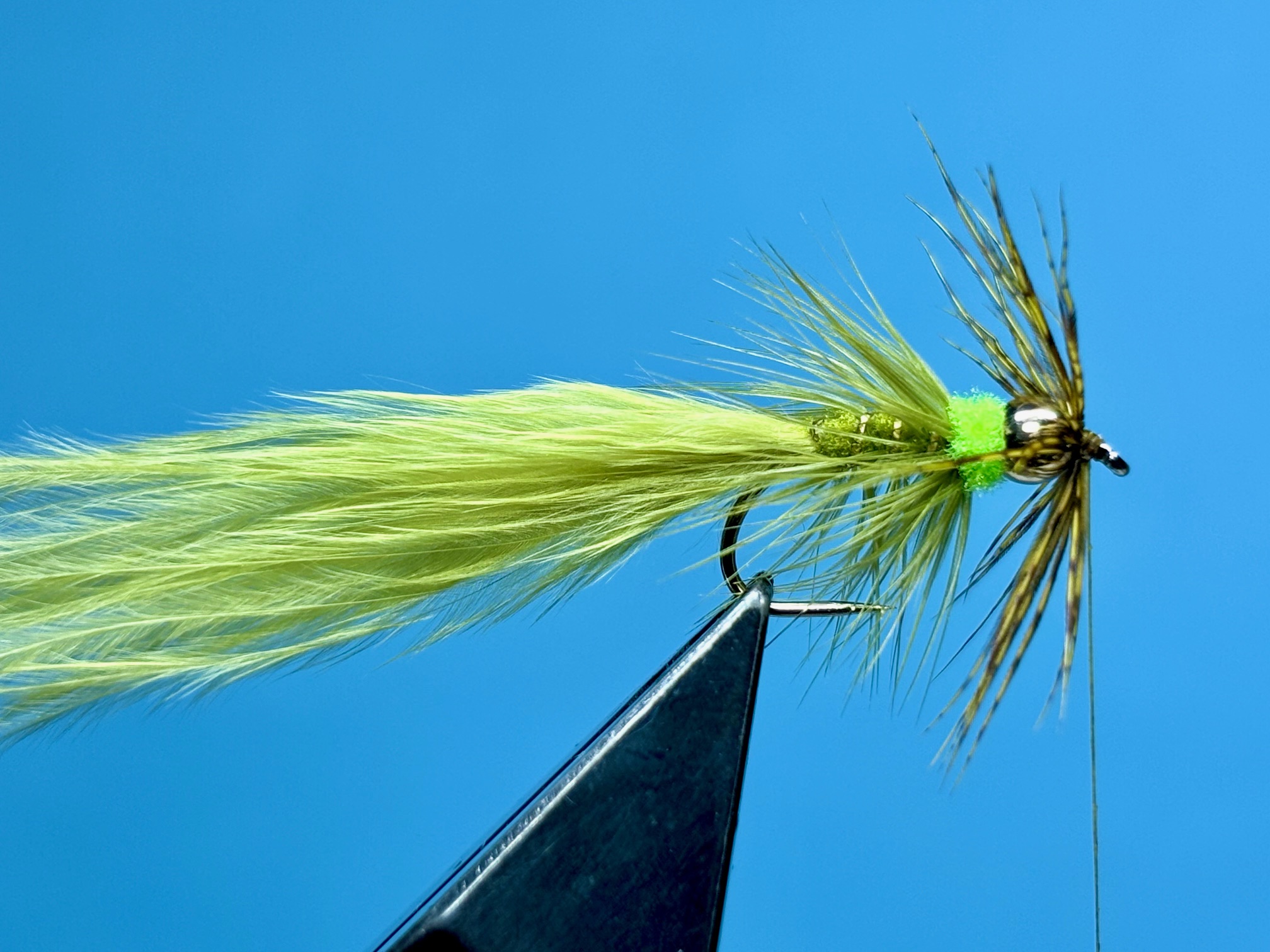
Head hackle: Brown partridge, dyed yellow, tied in front of the bead.
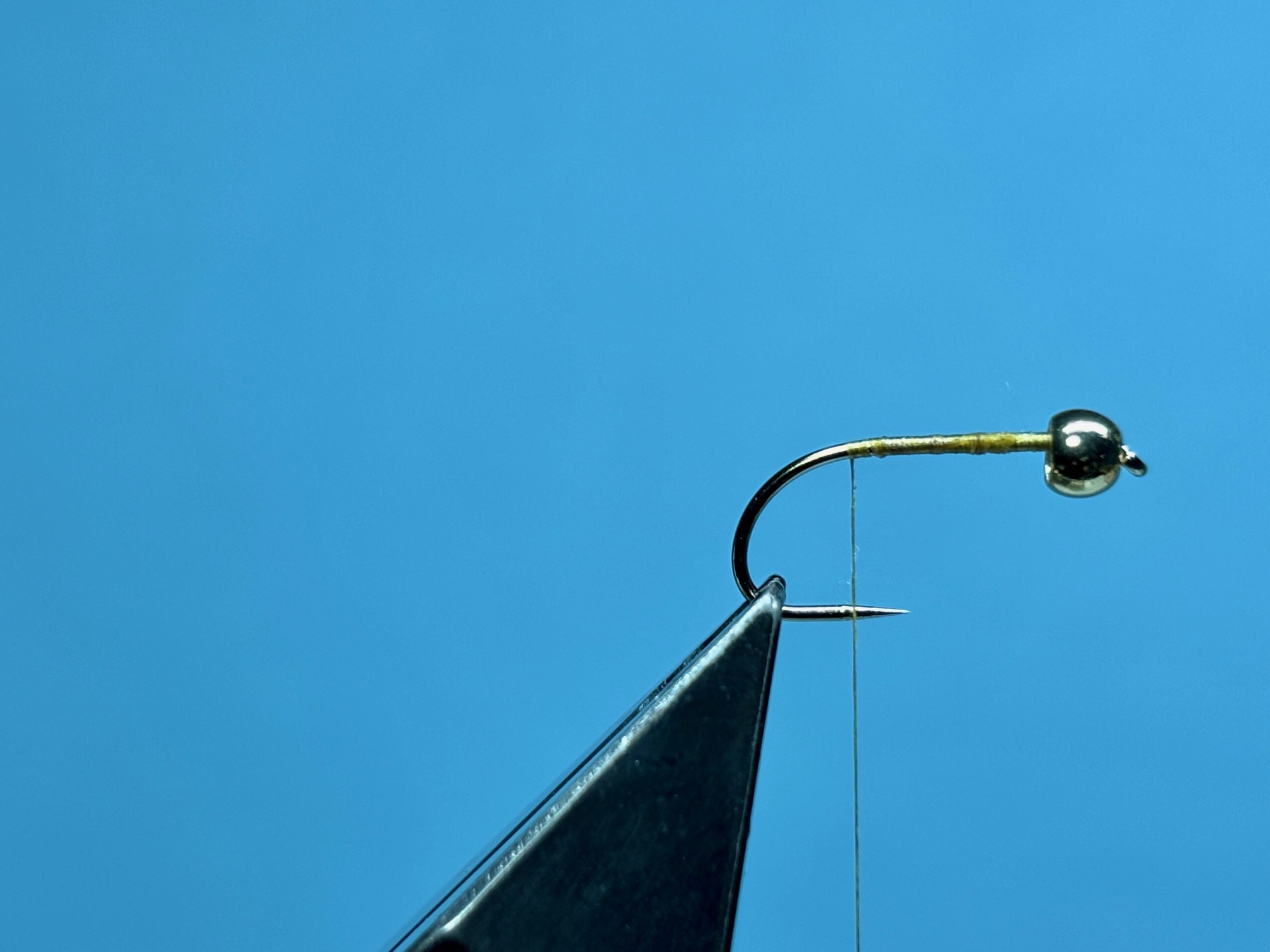
Photo 1. Feed the bead onto the hook small hole first, then secure the hook in the vice. Catch on the thread behind the bead and wind on a bed of thread to just before the hook bend and remove the waste thread. Do not fix the bead in position as it need to move backwards to allow the hackle to be tied in.
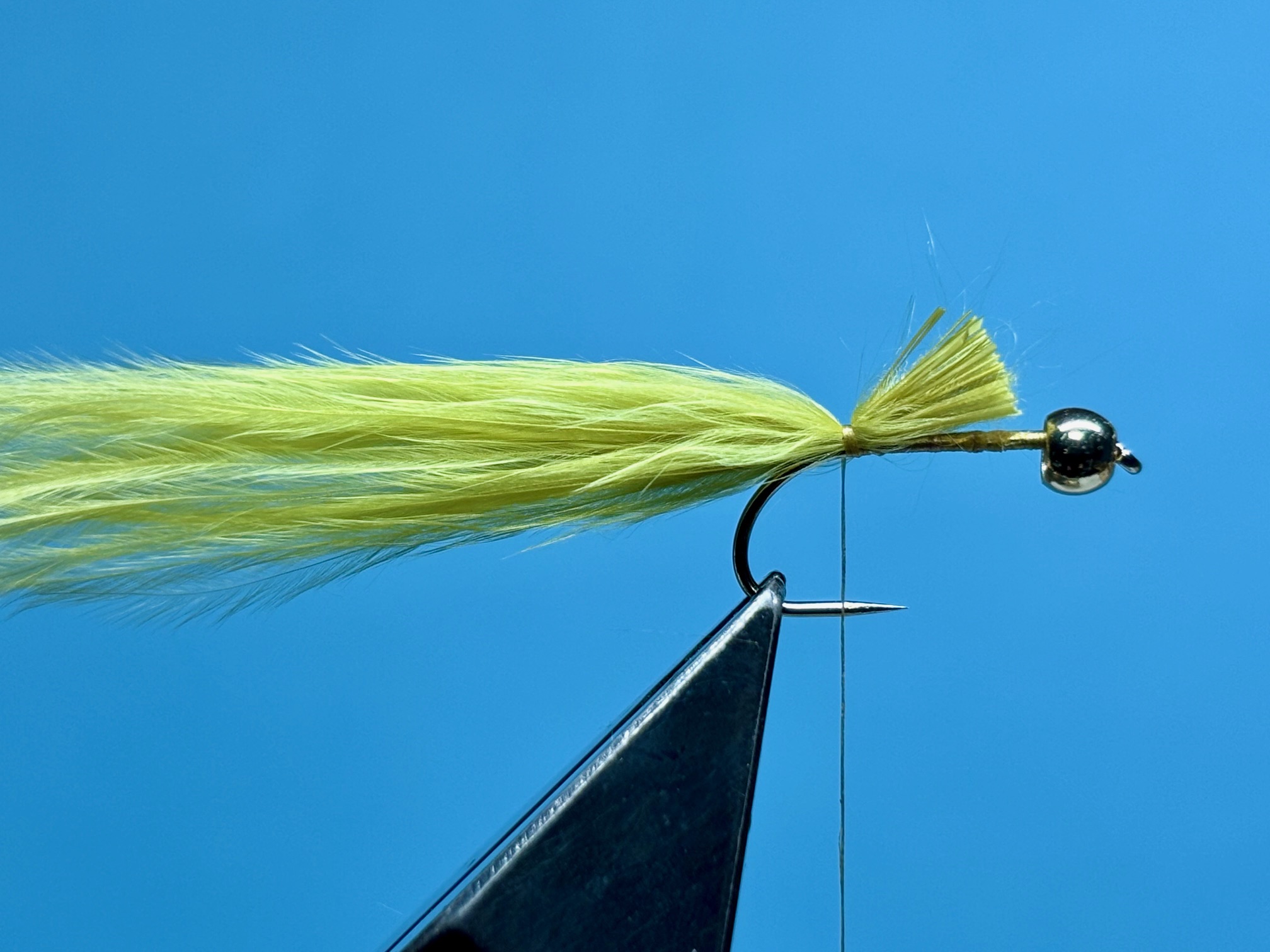
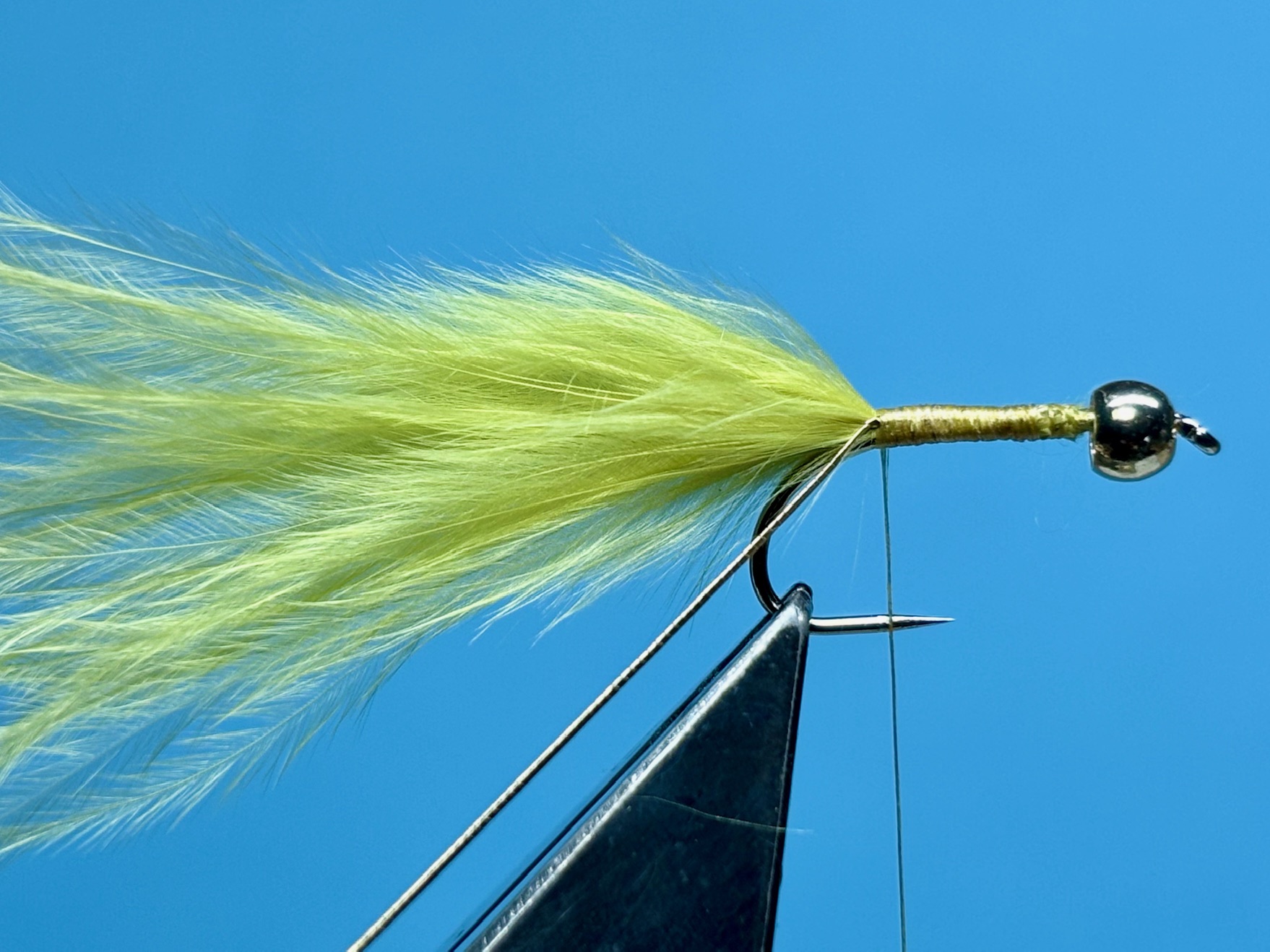
Photo 2. For the tail, take an olive marabou feather and pull off a slim bunch of fibres from the quill. Trim off the butt ends, pinch off the tips and remove the flue from the basal ends using thumb nail and forefinger. Tie in the bunch as a tail on top of the shank and about twice the length of the hook with the waste ends the same length as the abdomen.
Photo 3. Catch in the oval tinsel leaving the waste end the same length as the abdomen. Bind down both the tinsel and the marabou butt ends with touching turns of thread and return the thread to the tail.
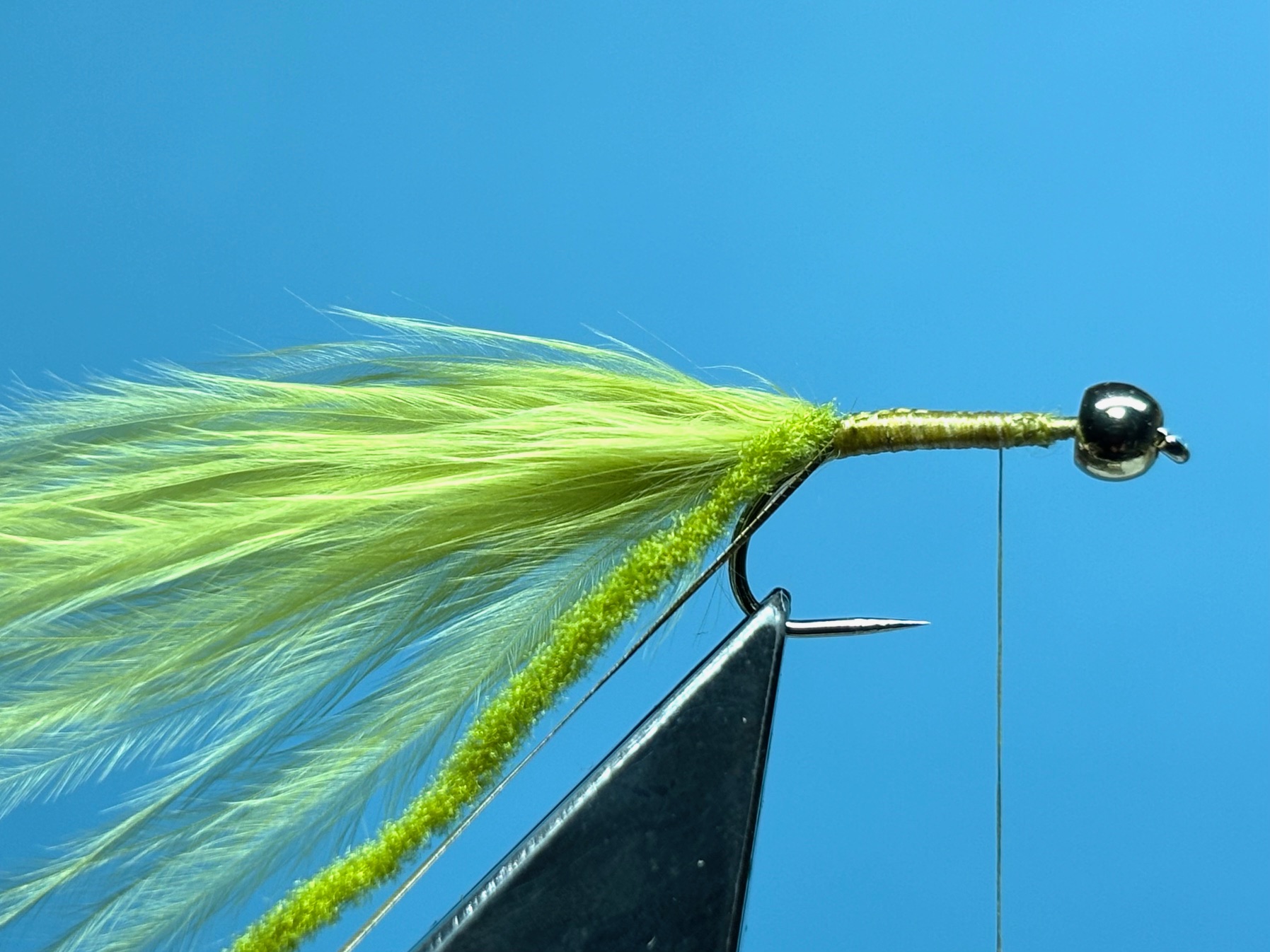
Photo 4. Remove the flue from one end of a length of olive Nano Eggstasy to expose the central core. Tie in the core securely and take the thread to the end of the abdomen.
Photo 5. Wind the Nano Eggstay in close touching turns to the thorax position, tie it down securely and remove the excess.
Photo 6. Using well waxed thread, tie in the hen hackle by the stem and if necessary, trim off any excess hackle stem. Wind on two close turns of hackle and continue to wind the hackle in open turns down the abdomen to the tail. Trap the hackle at the tail with the oval tinsel and continue to wind the tinsel in open turns up the abdomen and through the hackle fibres. Secure the oval tinsel with turns of thread, remove the waste tinsel and snip off the excess hackle tip.
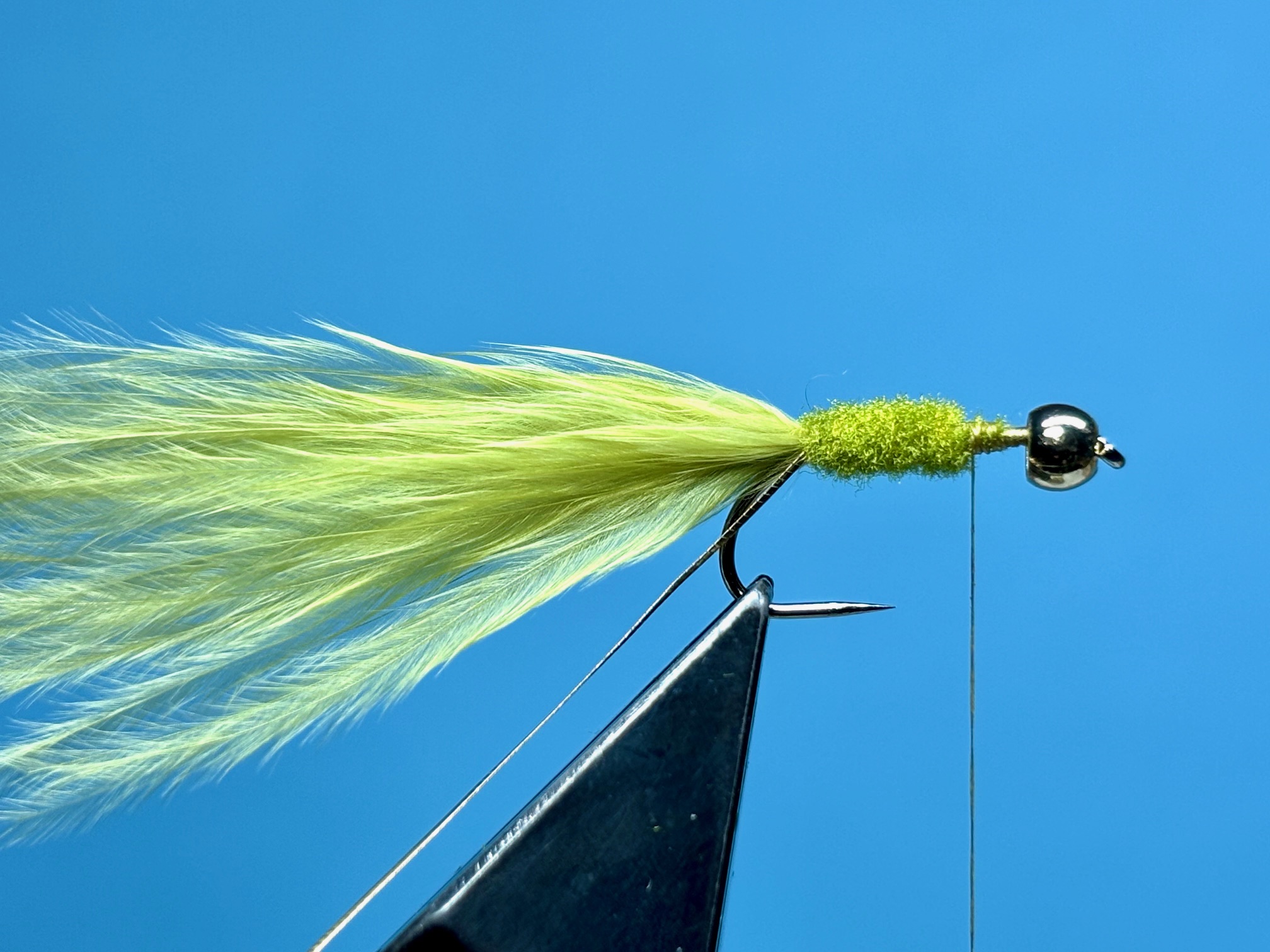
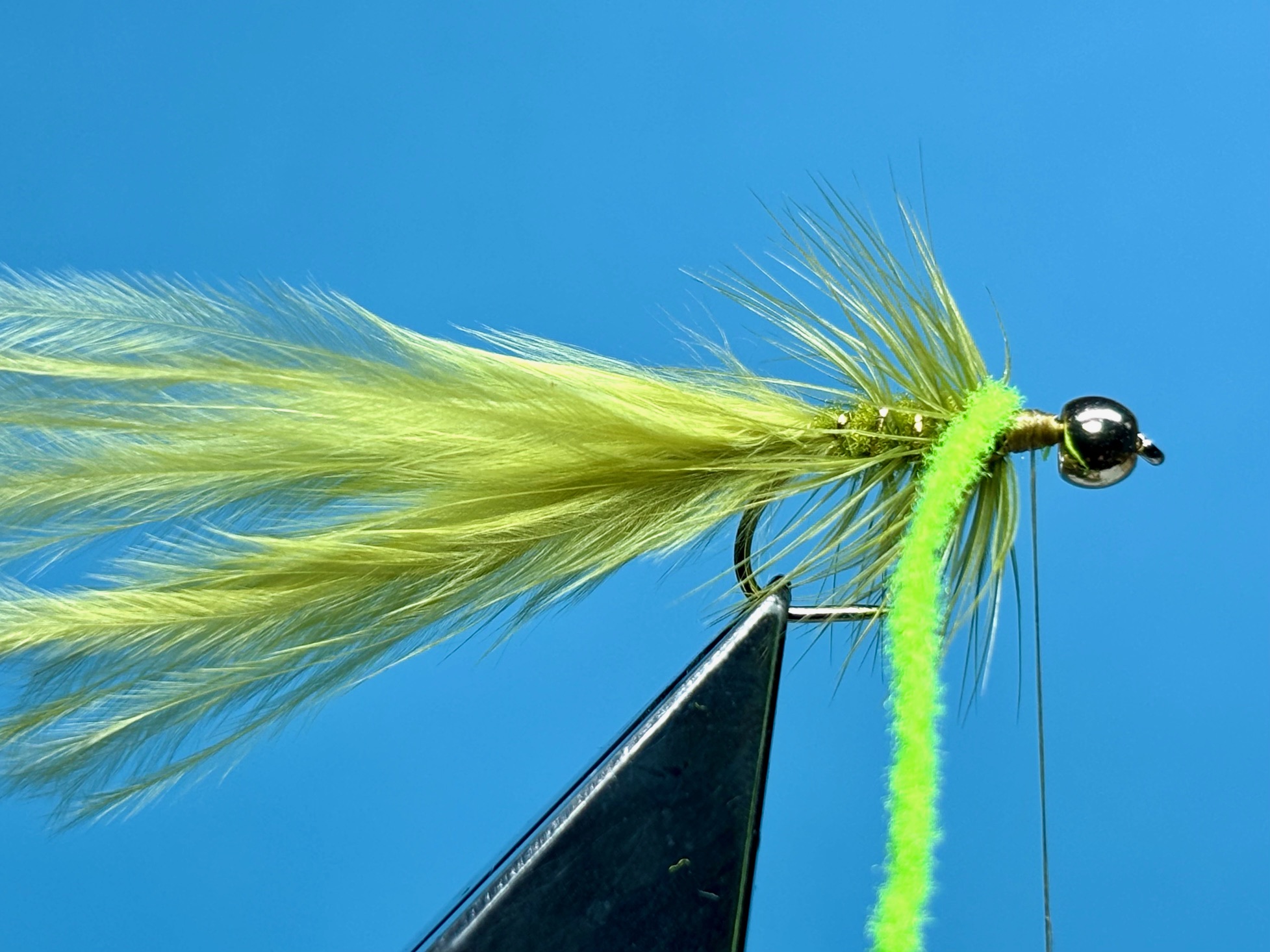
Photo 7. Remove the flue from one end of a length of fluorescent chartreuse Nano Eggstasy to expose the core and tie it in securely in front of the abdomen and hackle.
Photo 8. Form the thorax by winding two or three close turns of the Nano Eggstasy almost to behind the bead. Secure with thread and remove the waste Nano Eggstasy.
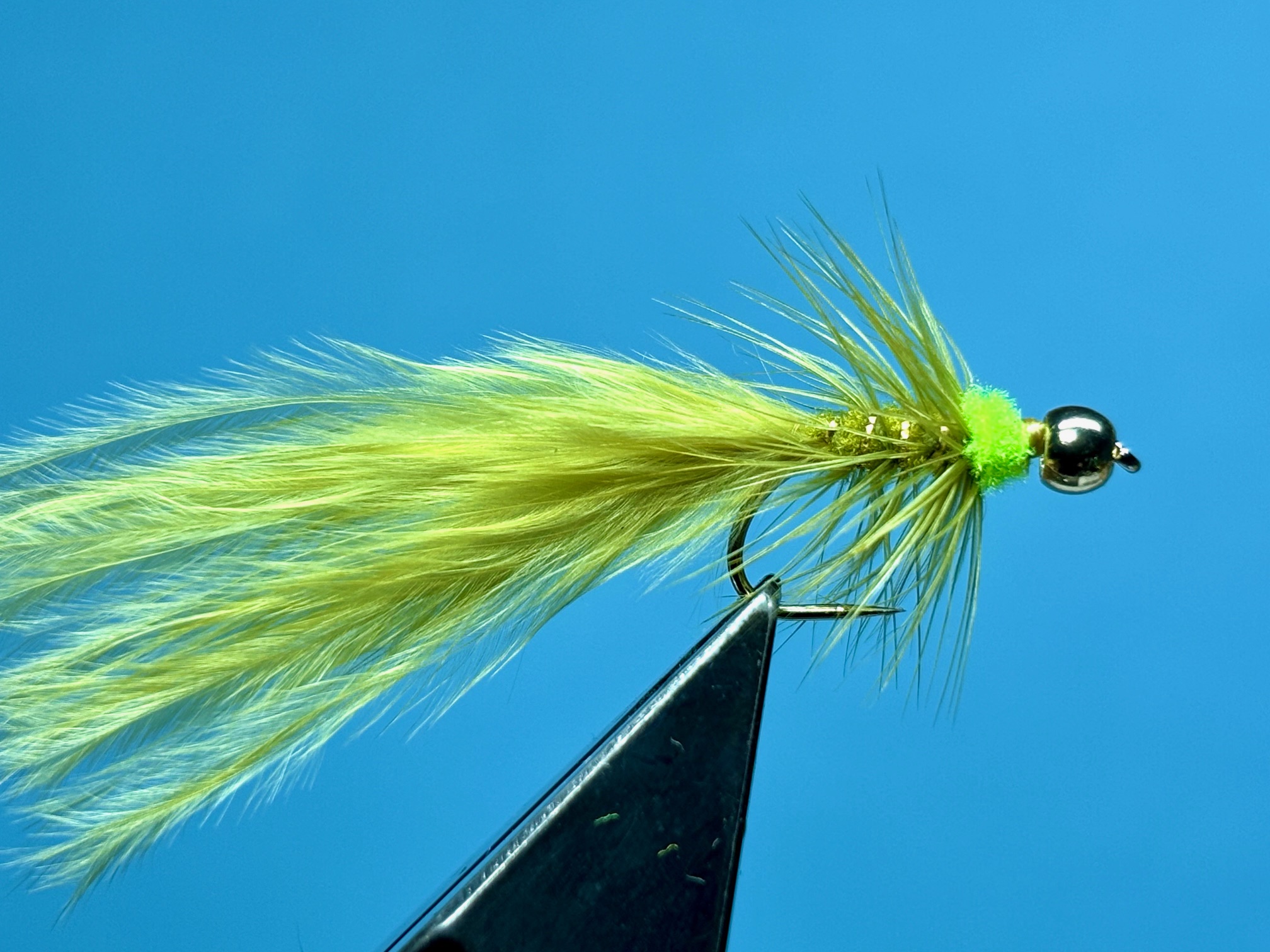
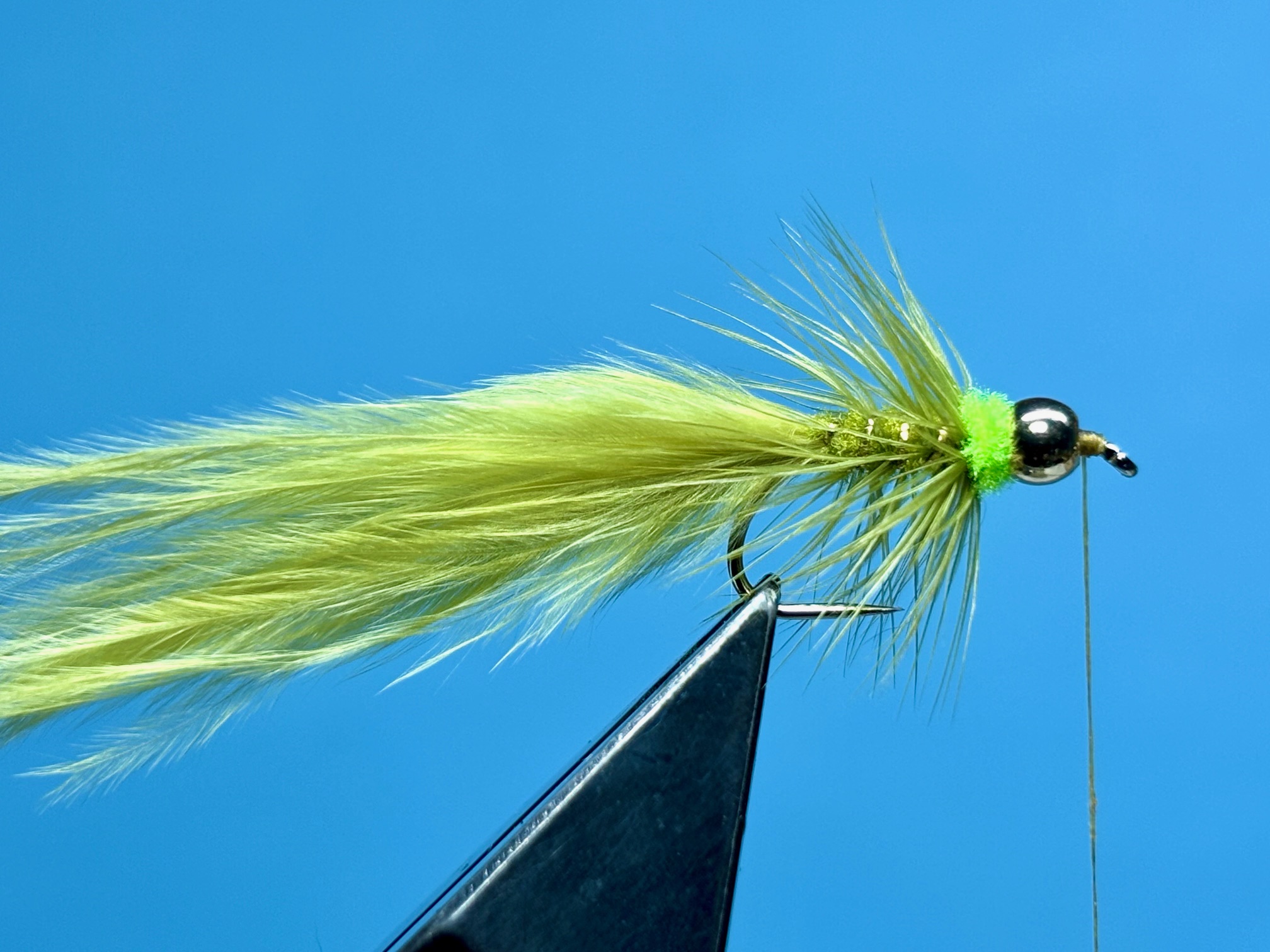
Photo 9. Whip finish and remove the thread. Push the bead back towards the thorax and reattach the thread behind the hook eye and remove the thread tag.
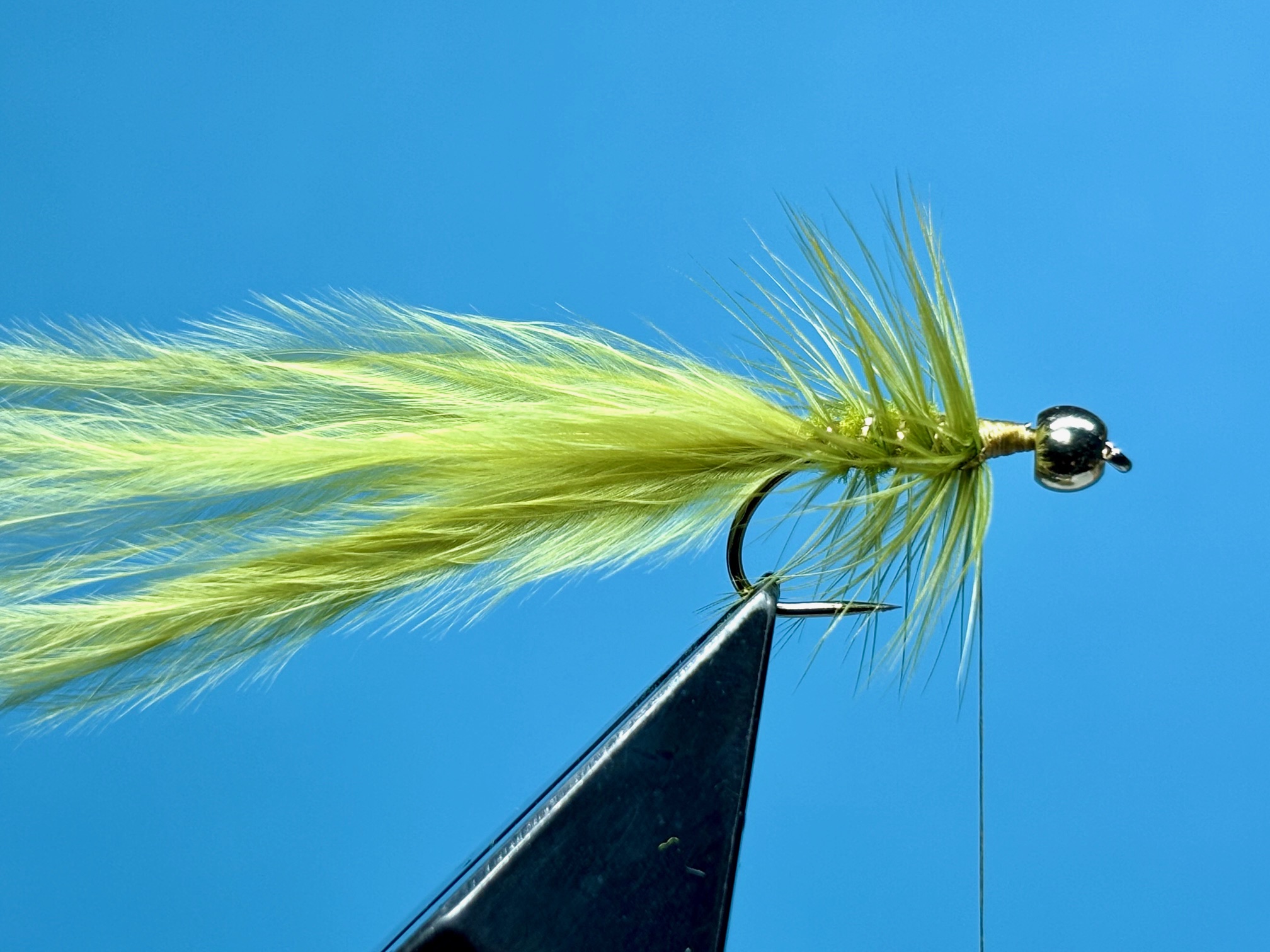
Photo 10. Isolate the tip of the partridge feather and trim off the excess tip leaving a small triangular stub. Tie in the partridge feather by the stub using well waxed thread and wind on two or three close turns of hackle. Secure with thread and remove the waste feather.
Photo 11. Form a neat head with a few more turns of thread, whip finish and remove the thread. Add a drop of varnish to the head to complete the fly.
Tying Tips
- Fine Rayon chenille was originally used to tie the abdomen and thorax of this pattern, then ultra suede chenille, but I now use Nano Eggstasy from Flybox. This material is slightly finer and softer in the flue which makes it easier to use, while the fluorescent thorax is unbelievably bright when wet.
- Keep the marabou tail reasonably sparse for maximum movement.
- Use a moistened finger and thumb nail to remove the fluff from the basal cut ends of the marabou. This will reduce bulk and help keep the abdomen as slim as possible. Never cut, always pinch off the fine marabou fibre tips for a more natural effect.
- Most hen hackles from Indian and Chinese capes are too short in overall length to palmer the body, so genetic hen hackles are best, but if these are not available, a soft Chinese cock hackle is a reasonable substitute.
- Hen hackles are softer and much less springy than the cock hackles normally used for palmering, so take care not to trap the hackle fibres when winding the rib through the hackle fibres. I try to wiggle the rib as I wind it through the hackle fibres which seems to work quite well, but should any fibres get trapped, lightly brush the fibres out with a piece of Velcro.
- Before tying off the thorax material, make sure the bead can move backwards by at least 1-2mm. to enable the head hackle to be tied in front of the bead.
- This is an updated, old – school pattern, based on the hugely effective concrete bowl lure from the 1980’s, but a simpler alternative can be tied using a fluorescent chartreuse bead, and a body of olive, or olive and UV Crystal Hackle or Straggle Fritz.
Fishing hints
- During my early years fishing the larger southern reservoirs like Rutland, Grafham, Tittesworth, Foremark, Carsington and Brenig, a heavily weighted olive Concrete Bowl lure was one of my most consistently successful flies, which made me think about tying a smaller slimmed down variant for use on Coldingham Loch, and this damsel nymph/lure was the result.
- The fly fishes well throughout the season, although it is probably best from May to September. It can be fished on any density line from a floater to a Di8 fast sinker, but on Coldingham Loch, depending on the strength of the wind, a floating, midge tip or intermediate line covers most eventualities.
- As a damsel nymph representation, it is best fished quite slowly with a twitchy figure of eight retrieve, but it can also be pulled quite quickly when fished as an out and out olive lure. Strangely, both these methods can work well, even on the same day.
- I usually fish this fly as a single fly on either a floater or a long midge tip line, casting along the edge of the lilies or in amongst the weed beds, but it also works well with a small Diawl Bach or a cruncher on the dropper.
- When cast into deeper water and given plenty of time to sink, large browns will regularly follow the fly as it rises up the drop offs and on several occasions, they have grabbed the fly right at the surface.

Recent Comments