Fly of the month – October 2026 by Les Lockey
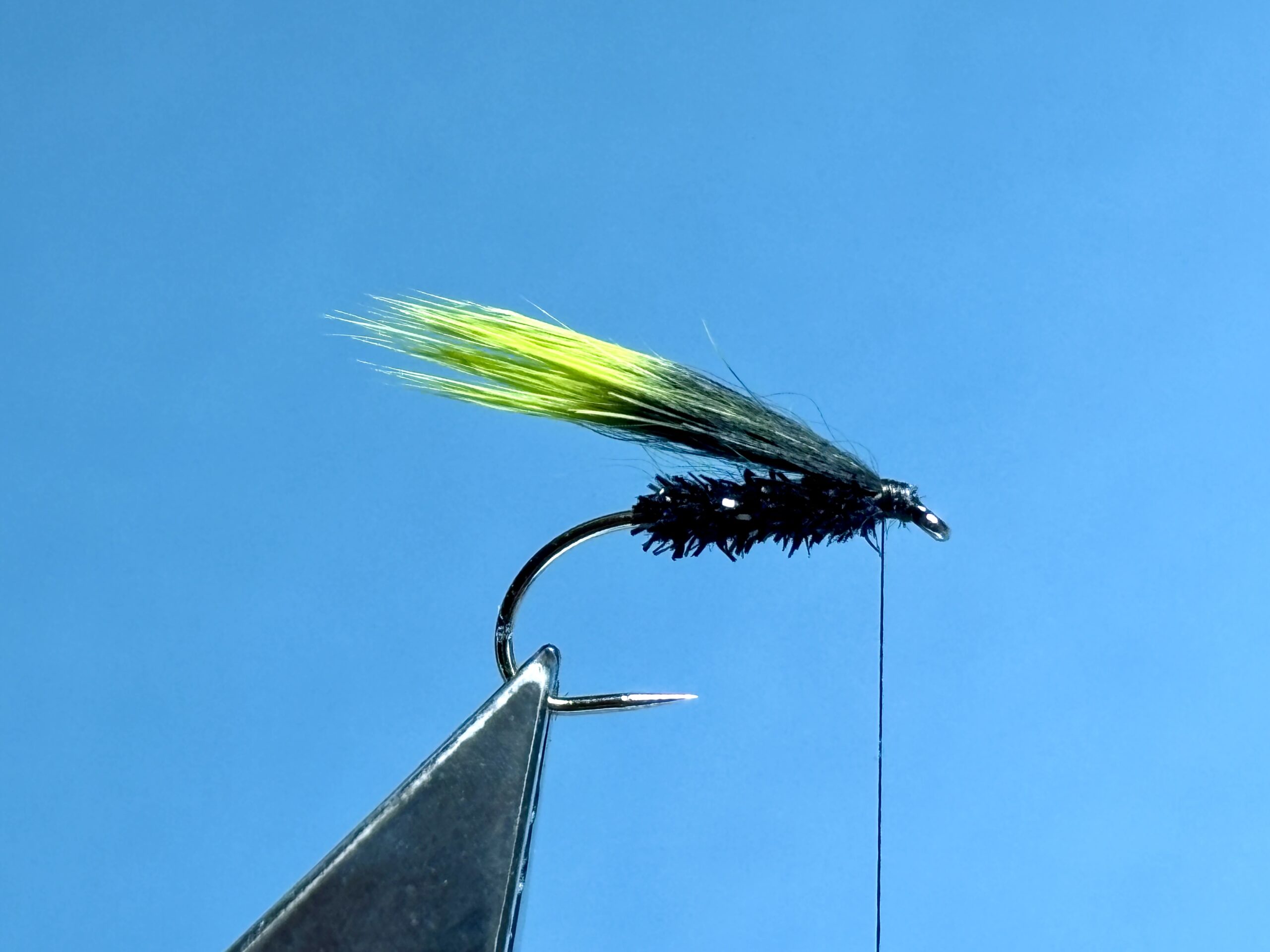
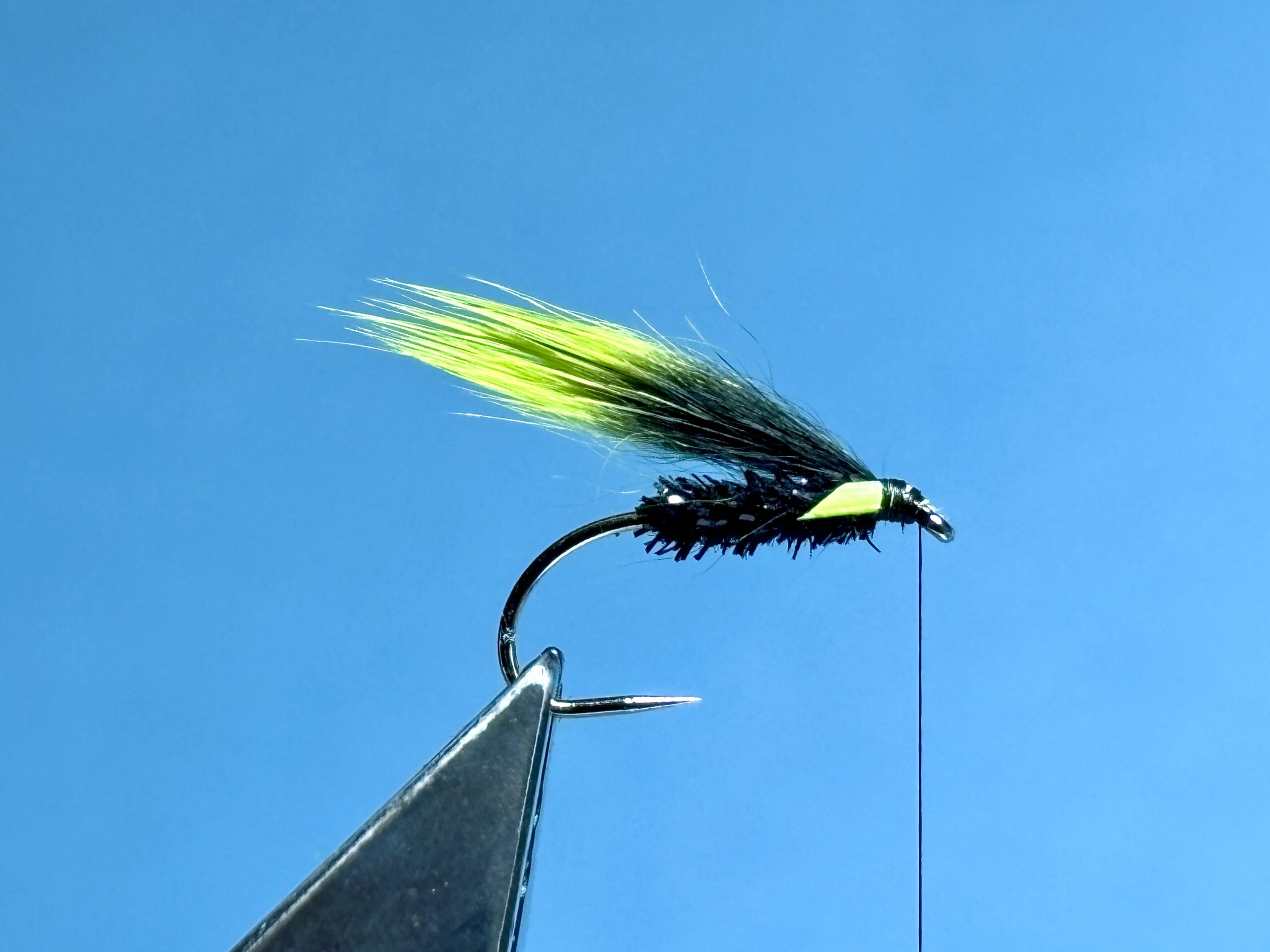
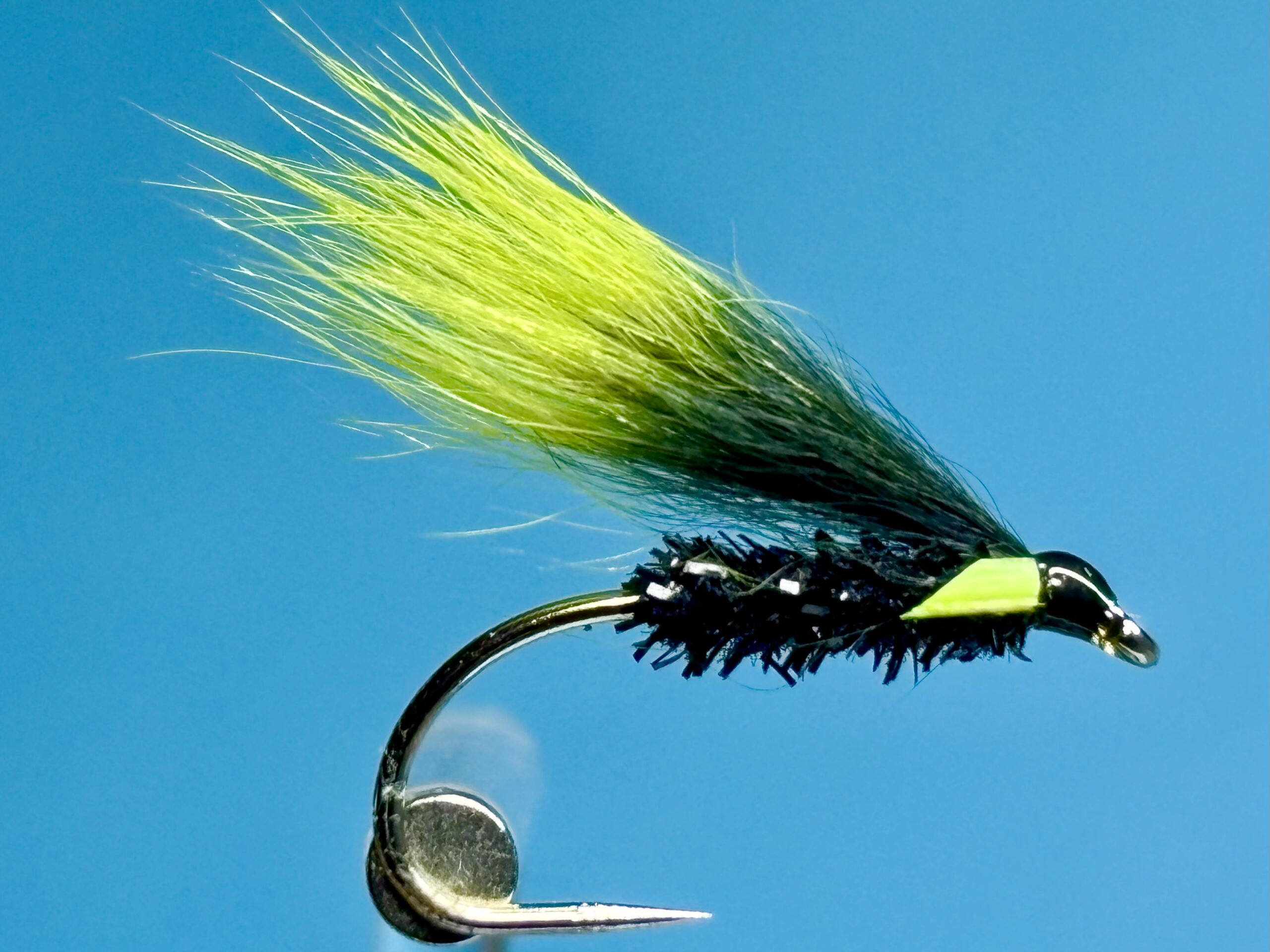
The Yellow Tip Cormorant
Hook: Fario FBL300, size 10 (Barbless equivalent of Kamasan B170).
Thread: Fly Smith GSP, black, 32D, or any fine black thread.
Body: Synthetic herl, black, from Celtic Blob Company.
Wing: Chartreuse tipped black rabbit zonker strip, from Flybox.
Cheeks: Fluorescent yellow goose biots.
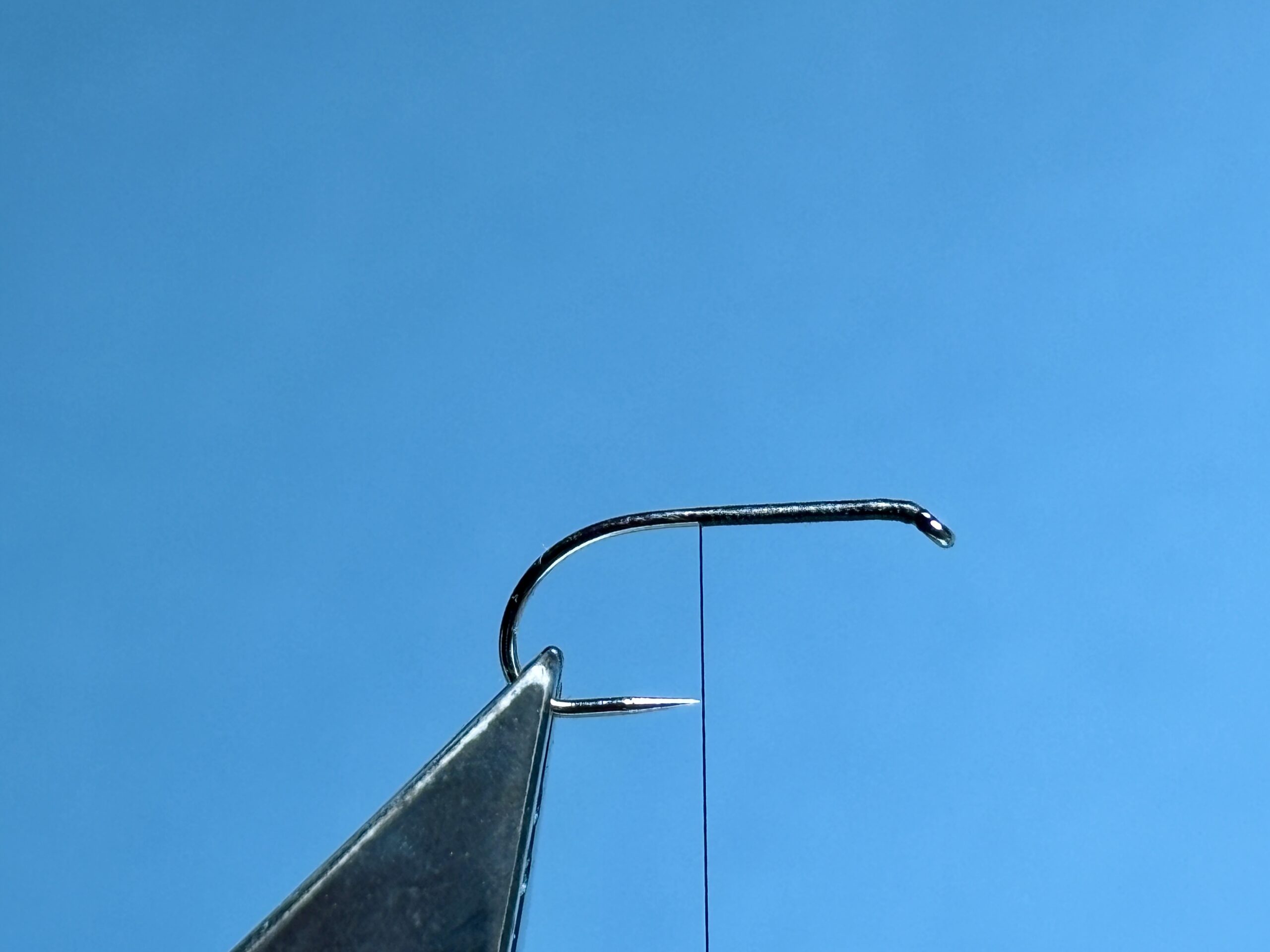
Photo 1. Secure the hook in the vice and wind on a bed of thread from the eye to opposite the hook point and remove the waste thread.
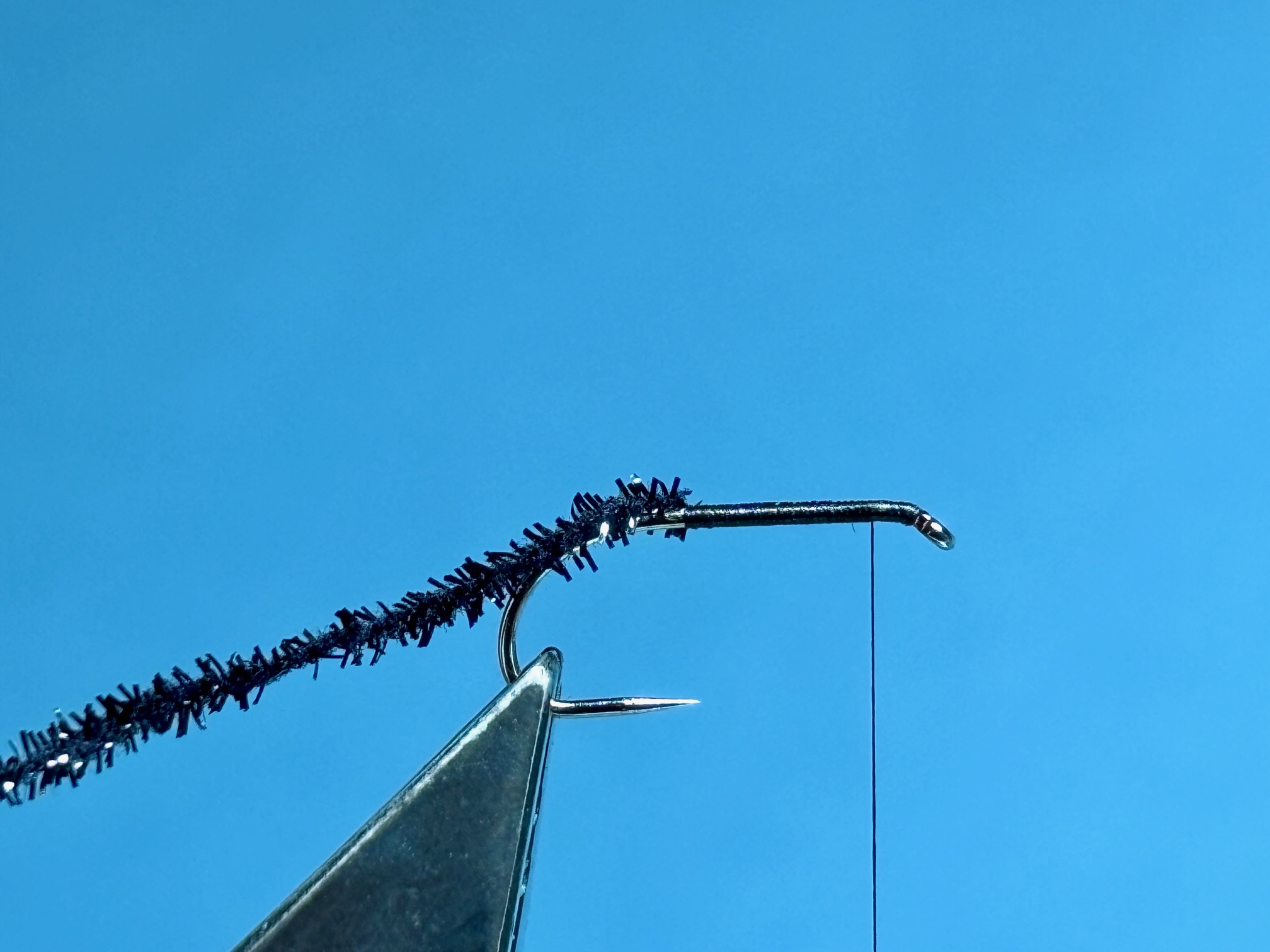
Photo 2. Strip away the flue from one end of a length of synthetic herl to expose the core. Tie in the core and bind it down with thread to about 2 to 3mm. from the hook eye.
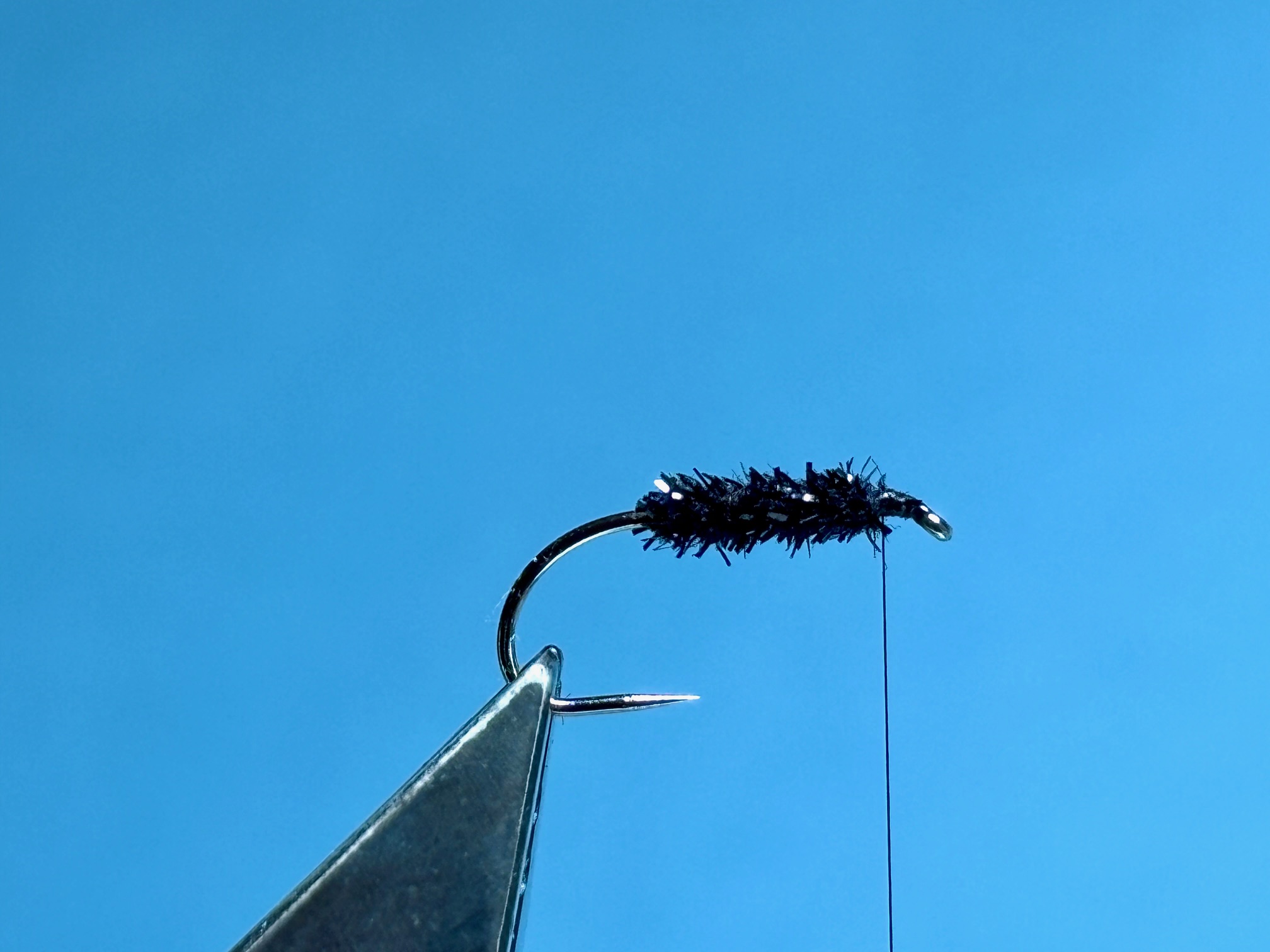
Photo 3. Wind the synthetic herl in touching turns to about a head length back from the hook eye, secure it in place with a few tight turns of thread and remove the excess synthetic herl.
Photo 4. Cut off a piece of the chartreuse tipped black rabbit zonker strip about one centimetre long and while holding the small piece of zonker strip by the skin, stroke the hair fibres together until the tips are roughly aligned. Hold the aligned hair and cut it away from the skin. Without altering the tip alignment, carefully remove any loose hair or under fur from the base of the bunch before positioning the hair on top of the hook shank so the tips extend slightly beyond the hook bend. In this position, tie down the bunch of hair securely with several tight turns of waxed thread and cut away any excess hair. Tidy the area with a few turns of thread.
Photo 5. Trim two goose biots to your preferred shape and tie them in equally on either side of the hook shank. Bind down the biots to the hook eye and while keeping the thread tight, break off each biot in turn.
Photo 6. Tidy the head with a few turns of thread, whip finish, remove the thread and apply a drop of varnish to the head to complete the fly.
Tying tips
- This is a simple fly to tie so long as you ensure the tips of the hair remain aligned and any loose hair or under fur is carefully removed.
- Chartreuse tipped black zonker strip is a new two tone colourway that as far as I know and at the time of writing, is only available from Flybox. These two tone zonker strips come in a variety of different colourways which allows several very interesting Cormorant and Zonker variants to be created. Two colourways I particularly like are the hot orange tipped black and the white tipped black. I tie the hot orange version with a Dennis the Menace red and black micro Straggle body with split jungle cock cheeks and the white tipped black version with a black synthetic herl body and fluorescent white biot cheeks.
- Fine Synthetic Herl is a relatively new material brought to the market by the Celtic Blob Company. It is only 0.8mm. thick which makes it easy to produce slim but robust bodies, and it comes in a wide range of colours including plain black plus metallic mixes reminiscent of peacock herl, which I’m sure will make it a much used material in the future.
Fishing hints
- This new pattern first saw the light of day at last year’s Lads and Dads competition where, for one fortunate competitor, it accounted for a magnificent brown trout estimated at 10lb. which is a pretty good introduction in my book.
- I think the fly will fish well at either end of the season, but I have a sneaky suspicion it will be at its best when the trout are chasing perch fry and, in these conditions, a floating line would be my first choice option, unless it was very windy, in which case a sink tip, or intermediate line might be a better option.
- As for a suitable retrieve, short pulls with long pauses or a slow figure of eight should suffice.
- Another option would be to fish the fly on either the middle or top dropper as part of a washing line set up.