Fly of the Month May by Les Lockey
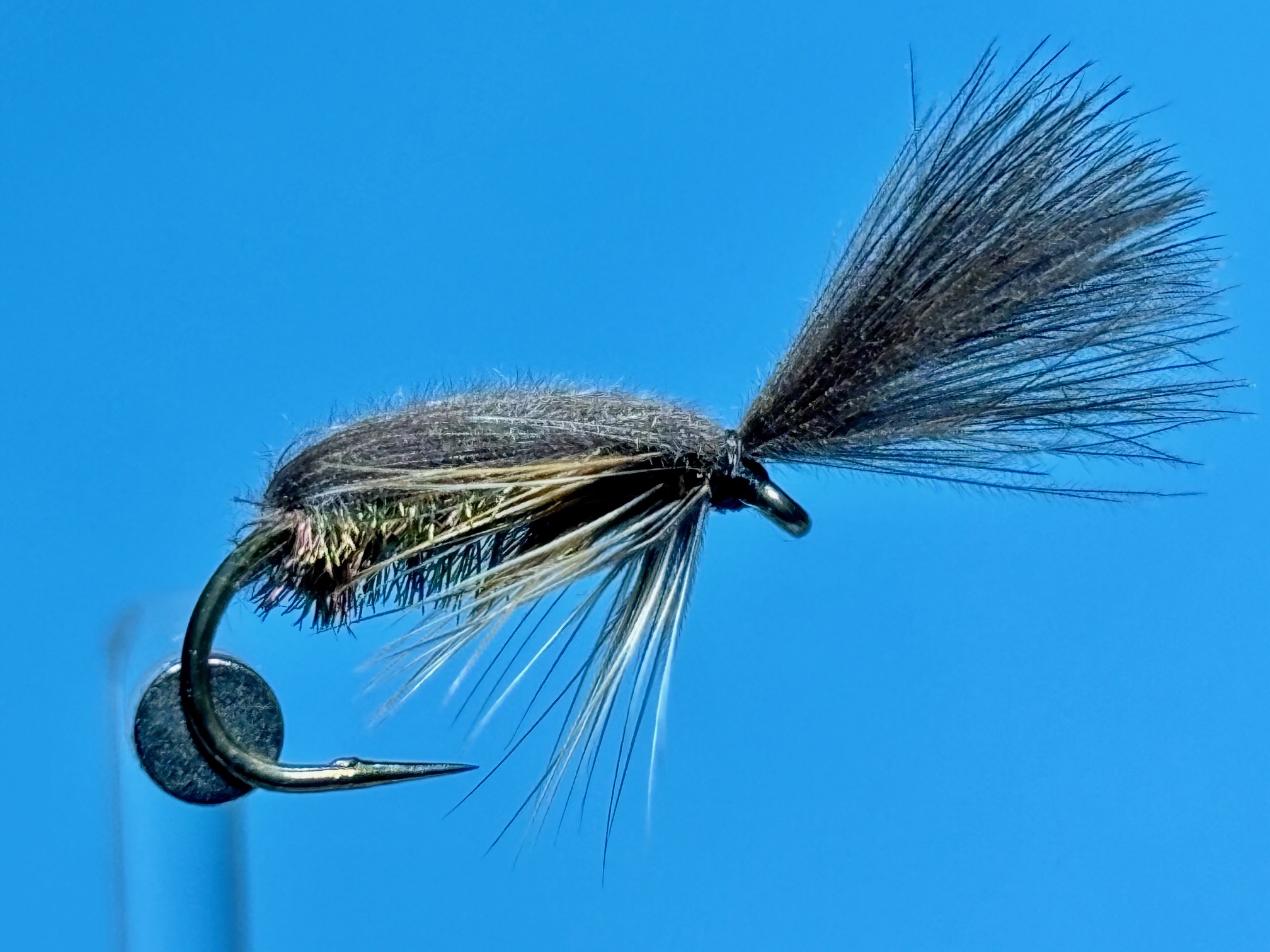
The Leatherman (Tommy Solberg)
Hook: Kamasan B160 short shank hook or any dry fly hook in sizes 8 to 18.
Thread: Fly Smith GSP, Black, 32D, or any fine black thread.
Shellback and wing: 2 – 5 natural CDC feathers, depending on hook size.
Body: Peacock herl.
Hackle: Furnace or Greenwell’s hen.
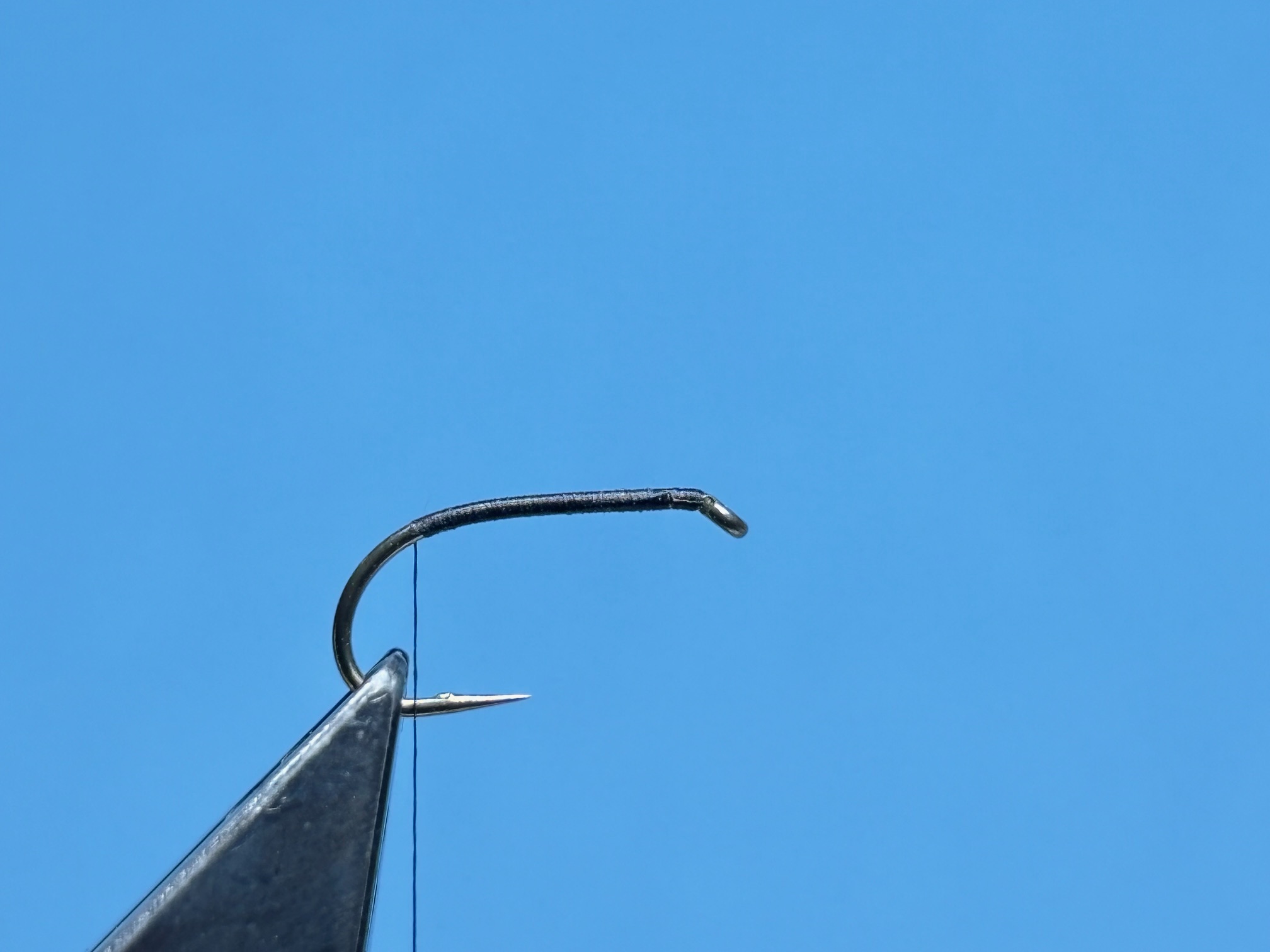
Photo 1. With the hook secured in the vice, start the thread at the eye and wind on a bed of thread down the shank to just round the hook bend and remove the excess thread.
Photo 2. For size 10 or 12 hooks and depending on feather quality, align the tips of 3 or 4 medium length CDC feathers and secure them squarely on top of the hook with a few turns of thread so their curves are uppermost, and the tips point rearward. At this stage, gauge the feathers for length by gently pushing them forward – the tips should extend in front of the hook eye about the same length as the body. If necessary, adjust their length and bind down the stems securely to about 2-3mm from the hook eye. Remove the waste stems and return the thread to the where the feathers were tied in.
Photo 3. Take a single peacock herl and snip off the delicate tip. Secure the herl in place immediately in front of the CDC feathers and bind it down with close turns of thread stopping about 2mm. from the hook eye.
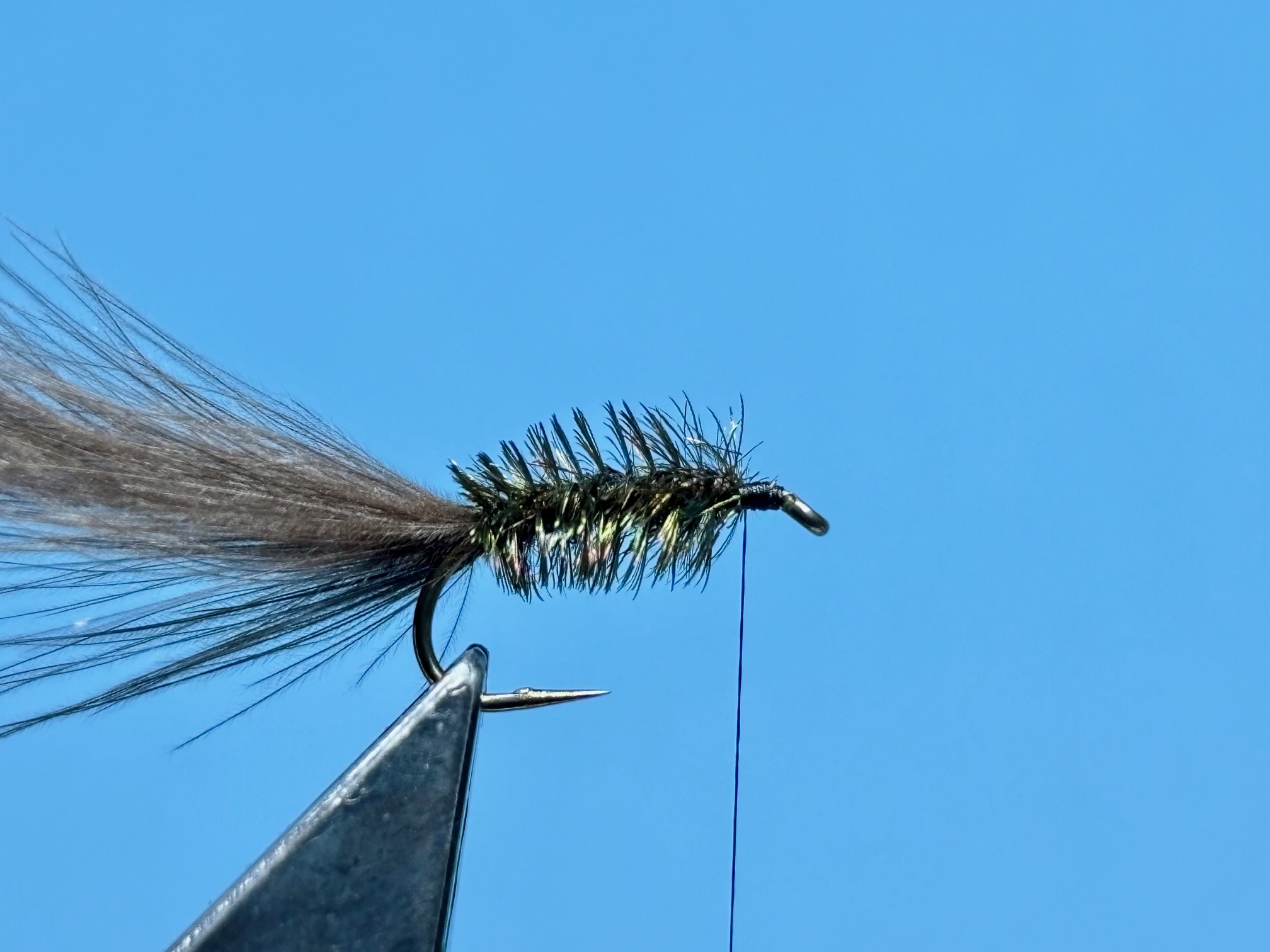
Photo 4. Carefully wind the peacock herl in close turns up the shank to meet the thread and tie it down. Remove the excess herl. For additional security, wind the thread in open turns through the herl and back to just before the eye.
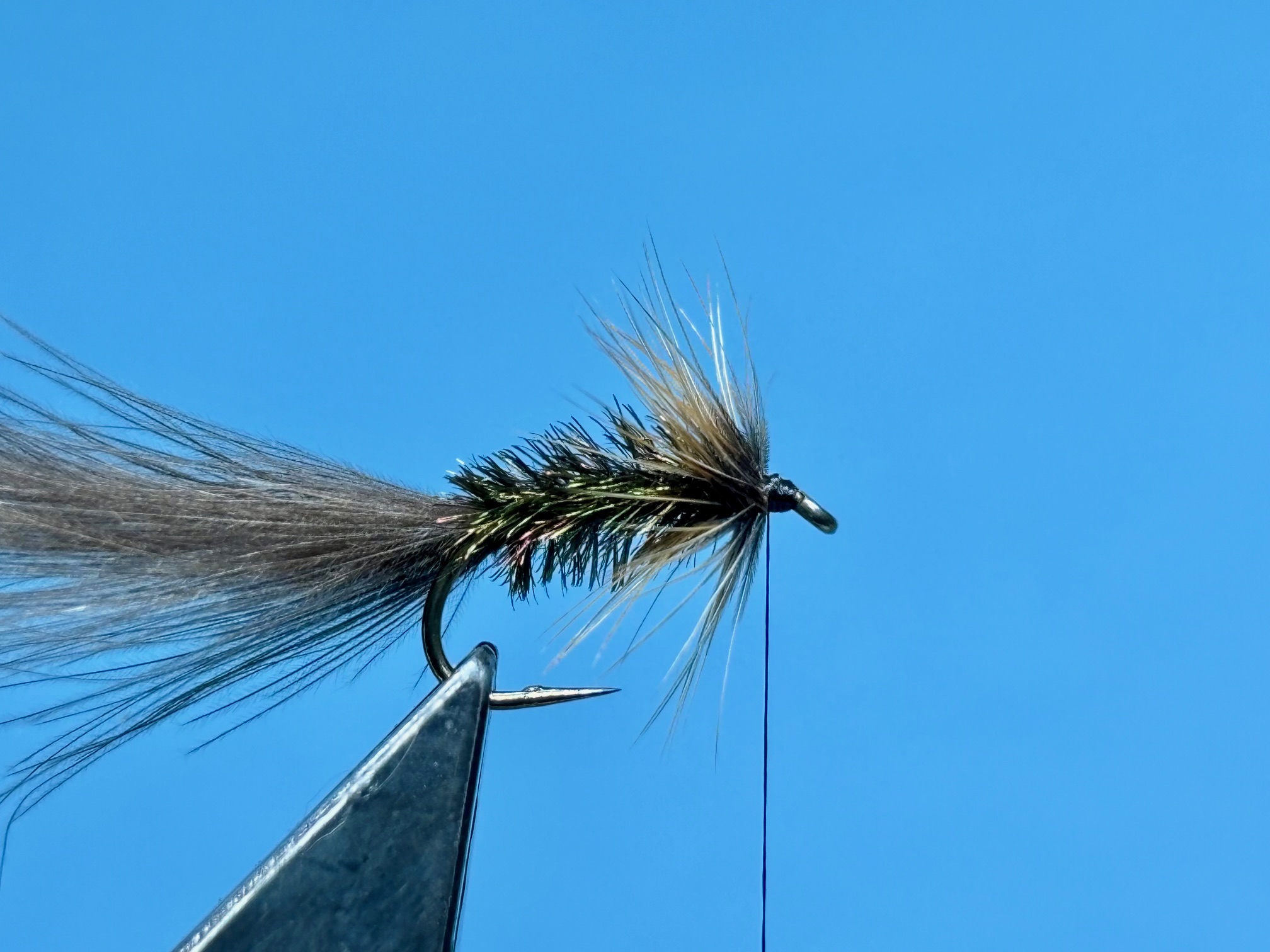
Photo 5. Isolate the tip of a furnace hen hackle and cut off the tip leaving a small triangular stub. Using well waxed thread, tie in the hackle by the triangular stub and wind on 3 or 4 turns, stroking the fibres rearward after each turn. Secure the hackle with a few turns of waxed thread and remove the excess hackle. Carefully manipulate the hackle fibres downwards and lock in place with a couple more turns of thread.
Photo 6. Pull the CDC feathers forward over the peacock herl and secure them just behind the hook eye with a few turns of waxed thread. Take the thread in front of the CDC feathers and create a small thread dam immediately in front of the CDC to slightly lift up the feathers.
Photo 7. Add a drop of varnish to the thread and whip finish through it and remove the thread to complete the fly. Any stray CDC fibres that protrude from the rear can either be left in place or trimmed off.



Tying tips
- This is a straightforward fly to tie, so long as you get the correct length of CDC for the shellback and wing. This of course, will depend on the hook size you use, which in turn will also dictate the size and number of CDC feathers required. I understand that Tommy Solberg uses a pre-marked gauge to determine and standardise CDC feather lengths for given hook sizes.
- Ideally, the CDC feathers should be dense in fibre, and the fibres should also be equally long along the length of the stem. Such feathers will reduce the quantity required and produce a dense wing with limited straggly fibres at the rear of the fly, which can be left in place or removed as desired.
- The peacock herl also needs to be of good quality with a long dense flue and a strong quill. These herls are best collected directly from the peacock eye tail feather just below the eye, rather than using those that are supplied in packets of strung herl.
- When selecting the hackle feather, choose one, or select a part of one, where the black centre of the feather is about the same length as the brown or ginger outer section, as this will provide a good transfer of colour in the finished fly.
Fishing hints
- Initially at least, this Norwegian pattern suggests a beetle imitation, but rather surprisingly, its creator Tommy Solberg, also uses it as an all-round emerger pattern simply by tying it in a variety of sizes ranging from 8s to 18s to cover many different flies from buzzers and olives through to mayflies. In fact, the pattern is so successful it accounts for 75% of all trout caught by Tommy. Given such effectiveness and versatility, it is rather apt that the pattern takes its name from the utilitarian Leatherman multifunctional tool.
- I usually fish the fly as a single fly on a tapered leader and a floating line, but when I’m not sure what is on the trout’s menu, I will often hedge my bets and fish 2 flies in different sizes, with the larger one on the point.
Last year while fishing the North end of the loch with my pal Mike, we found ourselves surrounded by selectively rising fish, but there was so much fly life on the water it was hard to see just what the fish were locked onto, so after trying all my usual fly options without success, I tied on a size 14 Leatherman and the fish response was both immediate and positive, resulting in one of my best ever early season returns.